
-
I. Educational materials
No one can make sound clinical decisions merely based on medical textbooks and approaches while circumventing much fuller concepts of nature. Once I had finally come to realize this simple truth, I have consumed far more courses on various aspects of science, including philosophy of science, science logic, advanced concepts of physics and even concepts of math and science of statistics, besides what is being offered here. Statistics, as a matter of fact, explain and teach how one can lie scientifically to make medical studies look perfectly correct and convincing, yet being just as meaningless from a frame of reference of broader science. To make this inconvenient truth even more inconvenient, we all have been trained, in conventional and alternative specialties, based on such studies or just what makes clinical/scientific sense. There is a furtive but a salient concept behind all of our medical activities. In a nutshell, it is a decision-making or problem-solving process, fruitful or barren, leading to a solution or to a dead end and where “what makes clinical/scientific sense”, per se, is on the bottom of the list.Having said all these things of seemingly higher learning and of exaulted intellectual nature, what has been said in a nutshell is empty words. They are as empty as saying that such-and-such medicine is scientific, or machine is state of the art, man/woman/spouse is or isn’t smart, obtuse, good, bad, ‘cool’, crooked or noble. All these are meaningless terms, as I have come to finally realize and hopefully correctly, following the lessons of countless mistakes because the only matter that really matters in these matters, aren’t the words, but a frame of reference that person/textbook/medical article/study or instructor uses. If we see holes in frame of reference, the statement is meaningless, if we don’t, it means something. But for discernment of presence or absence of holes, we need this simple element called knowledge or awareness. So, to us, whether it is a carpenter or Nobel laureate in medicine who uttered something, we are to commence with overcoming our cultural mental deformities and completely disregard his title and seeming persuasiveness of ‘good reasons’ in a statement justifying ‘so and so’, but what we are to examine first is a frame of reference that person uses that I would define, as an unspoken and the main language. And where we need to search for a very possible computer virus. So, the better we are to access and assess that unspoken language or frame of reference, the better we are able to recognize the true value or its lack in the material presented.
Getting back to the decision-making/problem-solving process, whether it is an FCT practitioner, Harvard’s medical professor, two hundred different conventional and alternative medical specialists or even mice in a basement, all are making some decisions on a daily basis. But where are we all coming from in relation to man’s body, that in health and disease consists of tens of thousands of components: anatomical, biochemical and energetic, which can and are being affected by hundreds of thousands of noxious or potentially morbid factors such as toxicological (100,000-150,000 in our environment alone), infectious, energetic, dietary, emotional, genetic and even cosmological, remains a key issue. This is because all the possible combinations/interactions between these variables and their role in disease defy even a mathematical ability for exact expression. But whatever it might be it certainly exceeds trillions. So, when FCT has attempted to reduce this modest number down to a dozen or two fundamental variables/combinations and appears to have done this quite productively, this is probably not such a bad attempt or frame of reference to depart from.
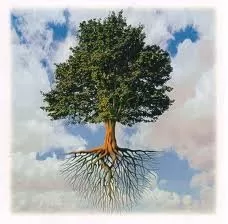
The issue is we must be very adept at working through these dozen or two variables/combinations. And for this, we need a sound decision-making/problem-solving process. And for this, we need a sound frame of reference. And for this, we need good understanding of what science is or isn’t and from there to be able to derive pertinent scientific knowledge, not just a pile of formally scientific but, in their bulk, low meaning facts. The latter, unfortunately, has been a keen preoccupation of medical specialties that served us with good and bad lessons. But, in order to recognize the difference between and ‘Why’ of these lessons, we need a good exposure to pertinent sciences and their logic that would lead us robustly, as a reliable compass, through a jungle in a sound decision-making direction. Because, for all practical purposes, I’d rather walk through a jungle alone being led by a reliable compass, than by a group of compass-less cheerleaders all heading cheerfully toward their and their patients’ mass grave. Another illustration/attempt at understanding a very complex body of science vs. superficial scientific arguments might be a comparison with an ordinary tree. The leaves are fed off the smaller branches, the smaller ones off the big ones, big ones off the trunk, trunk off the roots, roots off the soil. Soil? Off the Big-Bang, Big-Bang off the universe. Failure to realize and follow through this chain of nature well explains the failure of all alternative and conventional specialties in serious and complex chronic and degenerative diseases.
So, whether we are assessing a man, woman, gadget, research finding, scientific study, medical textbook or disease, but at the level where this leaf-universe circle is complete or incomplete, we are arriving to conclusions which are as good or bad or as complete or incomplete as this circle is. In the end, if all there was to science just having ‘make sense’ scientific facts and theories, which all by now have reached millions in numbers, why would exact sciences seek superstring theory – the unified theory of fundamental laws? This is because exact sciences, unlike medicine, realize that unless a circle is complete, at given state of knowledge, a pile of scientific facts, per se, will always fall short of deep understanding of nature and, therefore, of problems to be solved.
Because each specialty displays its branches and leaves which all look plausible and ‘make sense’, as all branches and leaves, they do appear legitimate. But what about the rest of the circle? In a nutshell, a good clinician and tester must always question any finding and must always strive to ask that extra question: What is underneath? What else might this be connected to? And even after these have been answered seemingly well, to keep asking the same question. And for this, we need knowledge base that can lead to these ‘underneath’ layers and corrections and their questions.
Even if some medical theories touch upon what seems to be a part of a root or soil or cosmos and thus, entice, the circle has still to be complete, otherwise, that soil or, even cosmos will be nothing but a stump. And stumps, notoriously, are limited objects that end up in limited journeys. By the way, what all of the medical specialties have done is an appendectomy in reverse, that is, they cut off the most important part – the body, the body of important scientific knowledge – while leaving themselves an appendix, a stump.
So, if we do not wish to follow this spirited path, we need to constantly upgrade and format our mental software as the testers, clinicians, and better decision makers.
Therefore, below, you will find many important parts of that amputated body of knowledge – The Joy of Science – that, with the rest of the courses, will serve as very important mental software upgrades, for now.
All these I have pre-screened, some years ago, others, recently.
1. The Joy of Science.
Understand the 60 principles that govern all of science. If we claim that Man is a replica of nature that he is, we, then, must pursue its entirety. This course is an excellent place to begin because, unlike medicine, most of these came from far more exact and superior in their deductive power and, thereby, more successful sciences than medicine. Therefore, let us learn and apply these to medicine.Contents
60 Lectures
30 minutes / lecture1. The Nature of Science
What distinguishes science from the many other ways humanity has devised to understand the cosmos? What makes knowledge “scientific”? Why is scientific literacy so important for citizens in the modern world?
2. The Scientific Method
Science is a search for answers, and thus needs well-conceived questions. How are these questions formed? At what do they aim? What is “the scientific method”? Is science purely systematic, or do accident and serendipity play a role?
3. The Ordered Universe
4. Celestial and Terrestrial Mechanics
5. Newton’s Laws of Motion
6. Universal Gravitation
7. The Nature of Energy
8. The First Law of Thermodynamics
9. The Second Law of Thermodynamics
10. Entropy
11. Magnetism and Static Electricity
12. Electricity
13. Electromagnetism
14. The Electromagnetic Spectrum, Part I
15. The Electromagnetic Spectrum, Part II
16. Relativity
17. Atoms
18. The Bohr Atom
19. The Quantum World
20. The Periodic Table of the Elements
21. Introduction to Chemistry
22. The Chemistry of Carbon
23. States of Matter and Changes of State
24. Phase Transformations and Chemical Reactions
25. Properties of Materials
26. Semiconductors and Modern Microelectronics
27. Isotopes and Radioactivity
28. Nuclear Fission and Fusion Reactions
29. Astronomy
30. The Life Cycle of Stars
31. Edwin Hubble and the Discovery of Galaxies
32. The Big Bang
33. The Ultimate Structure of Matter
34. The Nebular Hypothesis
35. The Solar System
36. The Earth as a Planet
37. The Dynamic Earth
38. The Plate Tectonics Revolution
39. Earthquakes, Volcanoes, and Plate Motions Today
40. Earth Cycles—Water
41. The Atmospheric Cycle
42. The Rock Cycle
43. What Is Life?
44. Strategies of Life
45. Life’s Molecular Building Blocks
46. Proteins
47. Cells—The Chemical Factories of Life
48. Gregor Mendel, Founder of Genetics
49. The Discovery of DNA
50. The Genetic Code
51. Reading the Genetic Code
52. Genetic Engineering
53. Cancer and Other Genetic Diseases
54. The Chemical Evolution of Life
55. Biological Evolution—A Unifying Theme of Biology
56. The Fact of Evolution—The Fossil Record
57. Charles Darwin and the Theory of Natural Selection
58. Ecosystems and the Law of Unintended Consequences
59. The Ozone Hole, Acid Rain, and the Greenhouse Effect
60. Science, the Endless FrontierDVD – Regular: $624.95 This: $ 249.95
(only 2 available)
CD – Regular: $449.95 This: $ – 199.95
Includes $55 value of transcript books
2. Understanding the Human Body: An introduction to Anatomy and Physiology
An excellent source of basic information about essential components and workings of the human body.
Contents
32 Lectures
45 minutes / lecture1. Cardiovascular System—Anatomy of the Heart
2. Cardiovascular System—Physiology of the Heart
3. Cardiovascular System—Anatomy of the Great Vessels
4. Cardiovascular System—Physiology of the Great Vessels
5. Respiratory System—Anatomy of the Lungs
6. Respiratory System—Physiology of the Lungs
7. Nervous System—Anatomy of the Brain
8. Nervous System—Physiology of the Brain
9. Nervous System—Spinal Cord and Spinal Nerves
10. Nervous System—Autonomic Nervous System and Cranial Nerves
11. Nervous System—The Eyes
12. Nervous System—The Ears, Hearing, and Equilibrium
13. Nervous System—Memory
14. Digestive System—Anatomy of the Mouth, Esophagus, and Stomach
15. Digestive System—Physiology of the Mouth, Esophagus, and Stomach
16. Digestive System—Anatomy of the Pancreas, Liver, and the Biliary Tree
17. Digestive System—Physiology of the Pancreas, Liver, and the Biliary Tree
18. Digestive System—Anatomy of the Small Intestine, Colon, and Rectum
19. Digestive System—Physiology of the Small Intestine, Colon, and Rectum
20. Endocrine System—The Pituitary and Adrenal Glands
21. Endocrine System—Pancreas
22. Endocrine System—Thyroid and Parathyroid Glands
23. Urinary System—Anatomy of the Kidneys, Ureters, and Bladder
24. Urinary System—Physiology of the Kidneys, Ureters, and Bladder
25. Reproductive System—Male
26. Reproductive System—Female
27. Reproductive System—Physiology of Genetic Inheritance
28. Musculoskeletal System—Physiology and Physics of the Muscles
29. Musculoskeletal System—Anatomy of the Muscles
30. Musculoskeletal System—Bones
31. Immune System—Anatomy and Physiology
32. The Biology of Human Cancer
Available in DVD format only.
Regular: $519.95. This $ 229.95
You may even try to test off the display of certain anatomical parts, if you do not mind computer/laptop exposure.3. The Human Body: How we Fail. How We Heal.
This complements very well the above course as it introduces the basics of the main pathological processes in the sick body. Also, presents basics of infectious agents and immune responses, environmental pollutants and carcinogenesis, allergies, stressful shocks, etc.Contents:
24 Lectures
30 minutes / lecture
1. How We Fail
2. Cell Biology—Introduction and Definitions
3. Inflammation—Basic Principles
4. The Inflammatory Response
5. Inflammation—Clinical Manifestations
6. The Immune Response
7. The Immune Response Continued
8. Hypersensitivity and the Allergic Response
9. Infectious Diseases—General Introduction
10. Bacteria
11. Viruses
12. Spirochetes, Rickettsiae, Chlamydiae, Prions
13. Malaria
14. Schistosomiasis, Filariasis, Tapeworms
15. Infectious Diseases—Treatment
16. Infectious Diseases—Triumph and Failure
17. Shock—Principles and Hypovolemic Shock
18. Categories of Shock
19. Cancer—The Enemy Within
20. Environmental Carcinogens
21. Mechanisms of Carcinogenesis
22. Invasion, Metastasis, and Angiogenesis
23. Treatment—Surgery, Radiation, Chemotherapy
24. How We HealAvailable in DVD only.
Regular: $ 254.95.
This: $ 164.95
Includes $25 value of transcript books4. Understanding the Brain
How does your brain really work? Indispensable information about basic structure, regions and their physiological functions of brain workings.Contents
36 Lectures
30 minutes / lecture
1. Historical Underpinnings of Neuroscience
2. Central Nervous System—Gross Organization
3. Central Nervous System—Internal Organization
4. Central Nervous System—Subdivisions
5. Cortex—Lobes and Areas
6. Cortex—Sensory, Motor, and Association Areas
7. Central Nervous System—Development
8. Central Nervous System—Cellular Organization
9. Pathways and Synapses
10. Neurotransmitters
11. Stroke
12. The Visual System—The Eye
13. The Visual System—The Cortex
14. The Auditory System
15. The Somatosensory System
16. Agnosias
17. The Motor System—Voluntary Movement
18. The Motor System—Coordinated Movement
19. Parkinson’s Disease
20. Language
21. The Limbic System—Anatomy
22. The Limbic System—Biochemistry
23. Depression
24. The Reward System—Anatomy
25. The Reward System—Drugs
26. Brain Plasticity
27. Emotion and Executive Function
28. Processing of Negative Emotions—Fear
29. Music and the Brain
30. Sexual Dimorphism of the Brain
31. Sleep and Dreaming
32. Consciousness and the Self
33. Alzheimer’s Disease
34. Risk Factors for Alzheimer’s Disease
35. Wellness and the Brain—Effects of Stress
36. Neuroscience—Looking Back and Looking AheadAbsolutely essential for testing in: Autism, ADHD, learning disabilities, depression, anxiety and panic disorders, Alzheimer’s, Parkinson, drug addiction. Strictly speaking, skillful FCT testing and treatment based on proper information concerning brain anatomy, physiology and morbid agents, simply makes people smarter and wiser, regardless of age or diagnosis. And this concerns so-called ‘normal’ people, starting with myself.
In my next e-letter, I will share how some of my patients in their seventies (an alleged age in our society for developing senility/Alzheimer’s) were reporting feeling more mentally capable and analytical with enhanced ability to make better decisions.
Available in DVD only.
Regular: $ 374.95.
This: $ $199.95
Includes $35 value of transcript booksAll courses are presented in an easy-to-understand and relatable language, either for a layman or a professional, and are available in limited quantities.
Ground UPS and handling in USA/Canada, and ground UPS or Postal charges to be added for Europe or other continents.